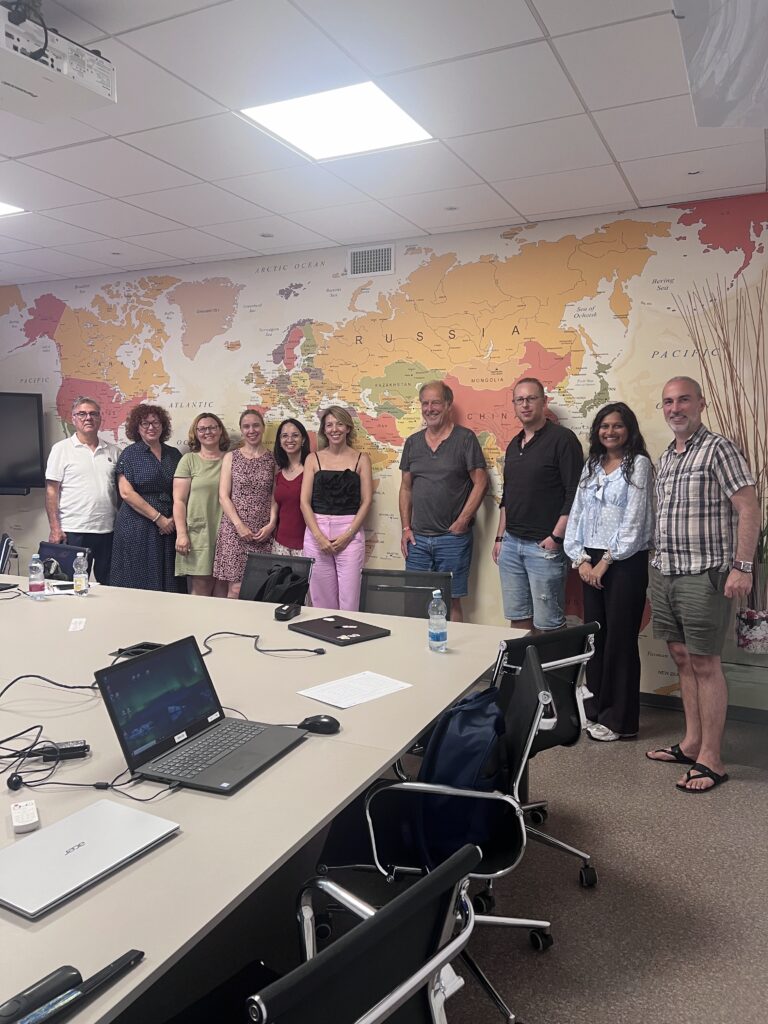
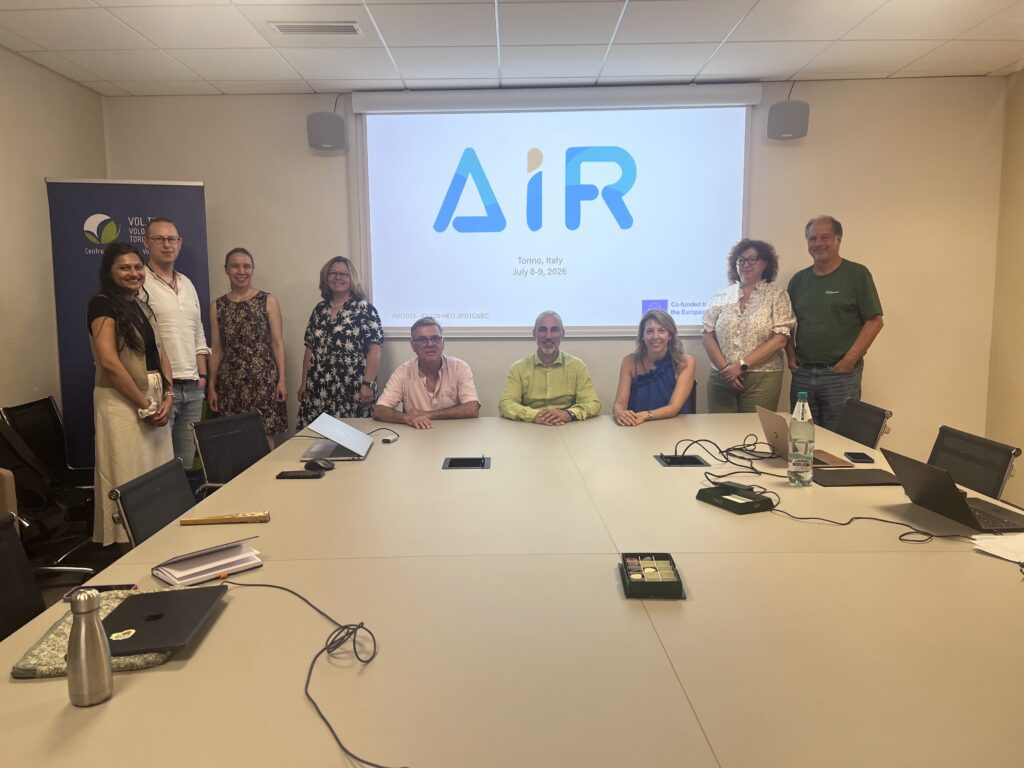
AIR partners met in Turin to develop training and piloting
From 8 to 9 July 2026, the AIR partnership convened in Turin, connecting the project’s research findings with the development of professional learning opportunities for higher education educators and staff. The meeting focused on selecting suitable immersive tools, designing the continuous professional development (CPD) programme and preparing the learning platform for future pilots.
Connecting research with practical preparation
The stocktaking and competence framework work provided the basis for discussions about training content. Partners explored how the identified needs could inform activities combining technological exploration with educational design, collaboration, assessment and reflection.
The creation of ethical and inclusive learning materials was identified as a priority. This involves helping educators to consider who can participate in an immersive activity, what support learners may require, and how to use technology responsibly.
Creating space to explore and design
An introduction to augmented and immersive reality tools enabled the partners to discuss which applications could support continuing professional development (CPD). Content creation and authoring tools, including CNR-ITD’s ARLectio Treasure Hunt and HaloAR, received particular attention.
The proposed training approach focuses on a small selection of tools, giving participants time to explore their potential and limitations. Short, challenge-based exercises will support initial experimentation, followed by dedicated time to develop a learning scenario for participants’ own educational contexts.
This connects practical experience with the decisions that educators face when planning immersive learning, such as choosing an appropriate approach, organising participation and considering how learning can be assessed.
Supporting competence development
Partners also worked on the didactic framework and the LEVEL5 reference system for continuing professional development (CPD). Competence-oriented learning and validation will encourage participants to reflect on their development in terms of knowledge, skills and attitudes as they prepare to implement immersive teaching methods.
The meeting also addressed how pilot experiences could be documented to create a basis for examining what works, what requires adaptation and what educators and learners gain from the activities.
Developing the shared learning environment
Discussions on the AIR platform considered how learning materials, tool descriptions and examples could be organised to support educators. Partners reviewed existing platforms for reference purposes and explored the transfer and adaptation of relevant resources.
Open Educational Resources were another important consideration, including clear licensing to inform participants about how their contributions would be shared.
The Turin meeting established a shared direction for the next development phase, which involves bringing together tools, professional learning and educational design in preparation for practical experimentation in higher education.