Exploring Inclusion Through Role-Play: Participa City Brings European Educators Together in Sofia
How can simulation games help educators address racism and discrimination? And what happens when professionals from different countries come together to explore challenging situations through role-play?
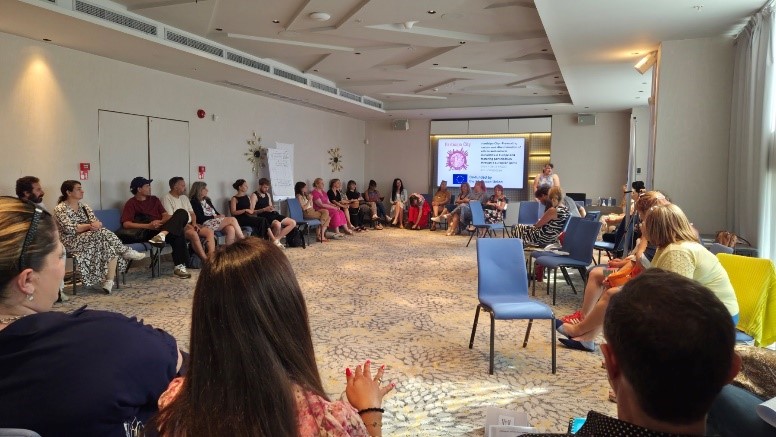
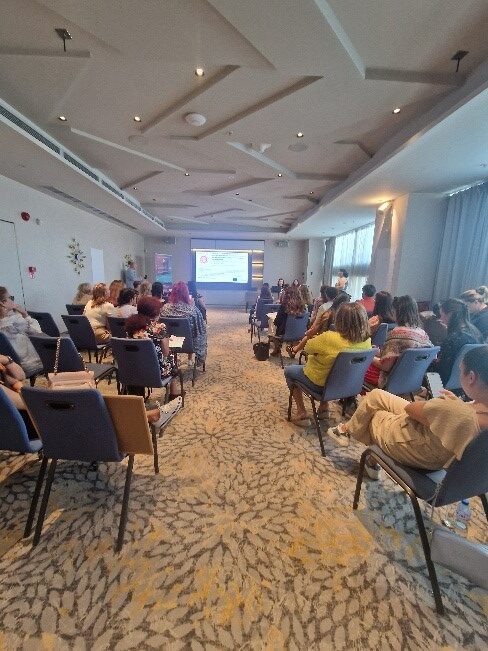
These questions were at the centre of the Participa City Transnational Multiplier Event, held on 1 July 2026 in Sofia, Bulgaria. The event welcomed more than 60 participants, including teachers, adult educators, training providers and professionals working in social inclusion, diversity and community development.
Participants from across Bulgaria were joined by international guests and representatives of the Participa City partnership, creating opportunities for exchange across different educational and professional contexts.
From European perspectives to practical learning
The event began with discussions about inclusion, equal opportunities and participation in European societies. Participants shared experiences and approaches to addressing discrimination, supporting minority communities and creating more inclusive learning environments.
An important focus was the role of education in challenging discriminatory attitudes and practices. The exchange highlighted the need for learning approaches that encourage critical reflection and help professionals recognise their own responsibilities in promoting equal participation.
Experiencing the Participa City simulation game
A central element of the event was the introduction of the European version of the Participa City simulation game, developed through international cooperation and based on an existing German prototype.
Rather than simply hearing about the game, participants were invited to explore selected scenarios through interactive role-play workshops.
Taking on different roles allowed participants to examine situations involving discrimination, exclusion and unequal opportunities from different perspectives. The subsequent discussions encouraged them to reflect on possible responses, institutional responsibilities and opportunities for change.
The aim of simulation-based learning is not to reproduce the actual experiences of people affected by discrimination. Instead, it creates a structured educational setting in which participants can critically examine situations, question assumptions and explore alternative courses of action.
Connecting learning with professional practice
The workshops also provided space to discuss how Participa City could be used beyond the project itself.
Educators and other stakeholders considered its potential application in adult education, professional training, community work and activities involving decision-makers and institutional representatives.
The international composition of the event added another dimension to these discussions. While participants brought different national and professional perspectives, many of the challenges they addressed were shared across contexts.
This exchange demonstrated the potential of participatory educational methods to connect personal reflection with broader questions of institutional practices and social inclusion.
Strengthening European cooperation
The event concluded with a joint reflection on the workshop experiences and opportunities for networking among Bulgarian and international participants.
Beyond presenting the project’s results, the Sofia meeting provided an opportunity to explore the practical relevance of the European simulation game and exchange ideas about its future use.
For the Participa City partnership, the event represented an important step towards making the project’s educational resources accessible to a wider community of practitioners committed to diversity, participation and racism prevention.
Discover the Participa City game and its educational resources: www.participa-city.eu