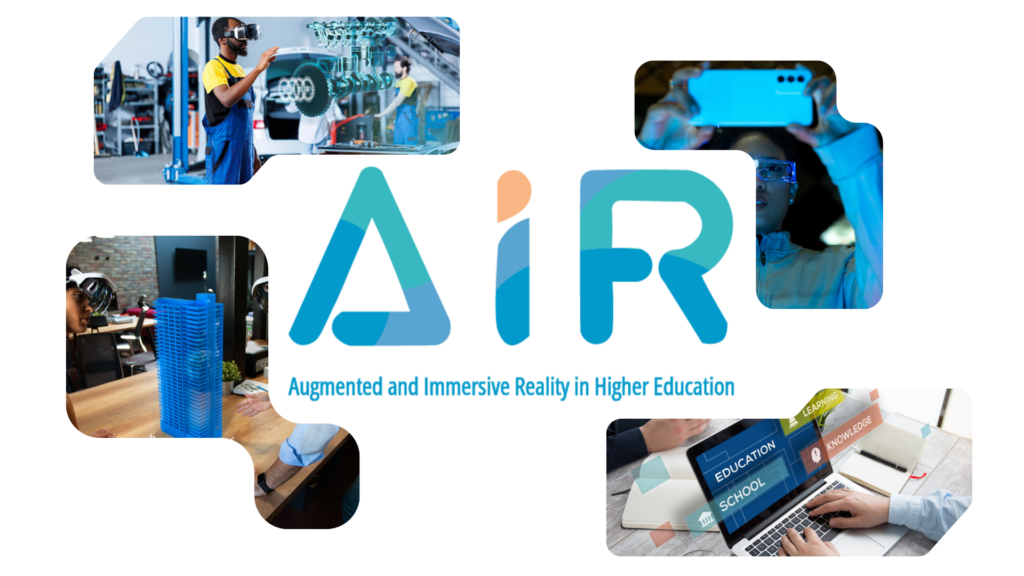
Bringing Immersive Technology into Teaching Practice: The AIR Approach
Integrating augmented and immersive reality into higher education requires more than simply providing access to new tools. Educators also need opportunities to explore these technologies, connect them with educational objectives and develop learning activities suited to their students and teaching contexts.
The AIR approach combines immersive technologies, continuous professional development (CPD) and competence-oriented learning and validation to achieve this. The aim is to support educators in progressing from initial exploration to practical application.
Connecting technology with educational design
While an immersive tool offers possibilities, its educational value depends on how these are utilised. Therefore, planning an activity involves considering what students should learn, how they will participate, and what support they may need.
AIR connects the exploration of selected augmented and immersive reality tools with the design of learning scenarios for university teaching. Working with these tools provides opportunities to examine their suitability, adapt activities and consider practical implementation conditions.
Developing knowledge, skills and attitudes
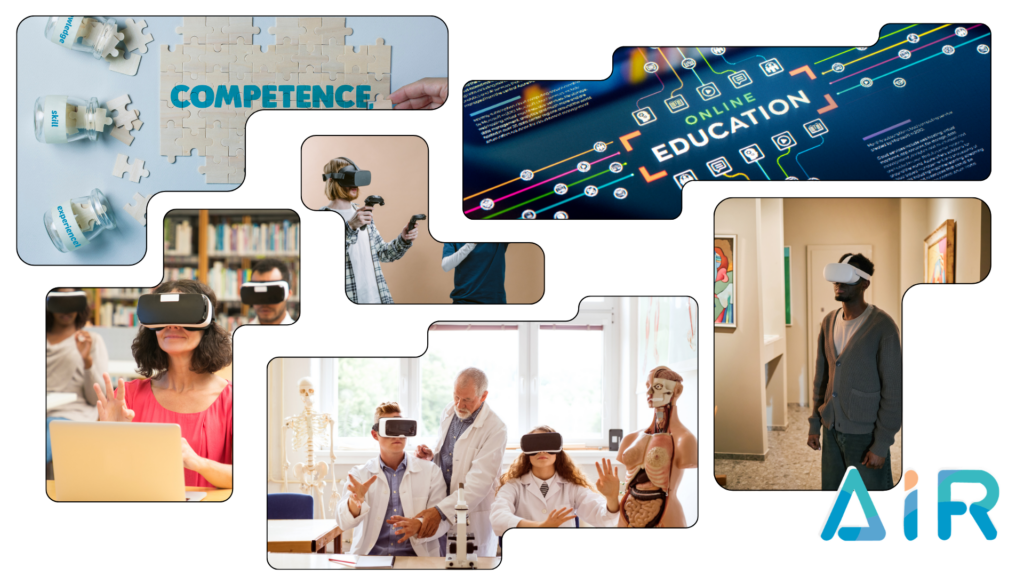
The CPD approach supports this process by bringing together three dimensions of competence development.
Educators need knowledge of immersive learning opportunities and limitations, as well as educational approaches. They also need the practical skills required to design activities, facilitate participation, respond to difficulties and assess learning. Attitudes, including openness to experimentation, critical judgement and responsibility towards learners, shape how this knowledge and these skills are applied.
Competence-oriented learning and validation provides the educational foundation for connecting these dimensions. Within this approach, LEVEL5 helps educators reflect on and document their competence development.
Planning, implementing and evaluating
These dimensions come together throughout the teaching process: when educators plan a learning scenario, implement it with students, and evaluate the experience.
Reflection and validation make educators’ development visible, while assessment and learner feedback provide evidence about the learning activity itself. Together, these processes can inform decisions about what to retain, adapt or reconsider.
AIR’s approach creates a connection between professional learning and classroom application. Its upcoming CPD and piloting activities will offer opportunities to explore how the selected technologies and educational framework interact in university settings, and identify any necessary adaptations.